Gallery Page
Some of these are work in progress/ Click on a Gallery in the left hand pane, then click on an image to expand it on the screen ...
Gallery Menu
12 Summer 17 Winter White Quilt Art Page 2016 Summer Dario Gallery 2017 Art SB A Rasher of Poems for Snarky Children Achill Island Ad Images All Hallows All Hallows, Russell Joslin Andrea Castell Gallery Winter 2017 Art Shot Art Shot Dec 22 Art Wall Summer 2022 Atrhur Rackham Illustrations sp 2012 Autumn 2008 Autumn 2011 Autumn 2012 Autumn 2013 Autumn 2015, Cathy Giles Autumn 2015, House Art Autumn 2025 Autumn Import Beautiful Films Blackbird Dock Blackbird Dock Art Blackbird Dock Illustrations Book Covers Brown Symbols Christmas Canzonetta 2022 Christmas Gallery Content D. Capobianco Dr Kildare Dr Suzanne Conboy-Hill Dromad Office (Co Leitrim) Easter Essay Art 2022 Fall 2009 Fall 2009, C. Mannheim Fall 2009, D. Capobianco Fall 2010 Falling for Spring Front Page Cartoon Garcia Lorca Gina Kelly Halloween Heart Images Indigo Logos Maire Morrissey-Cummins Museum New Banners Nieve November 2023 Oscar Folder Oscsr 2023 Photo Gallery, Summer Storms, Maia Cavelli Potters Illustrations Randall Joslin Rumpilstilt SB Sping Art 2008 Sping Art 2012 Spring 10 Spring 13 Art Wall 1 Spring 2007 Spring 2009 Spring 2010 Spring 2011 Spring 2013 Art Wall Spring 2014 Spring 2016 Spring 2016 SB Spring 2023 Spring 2024 Spring Gallery 16 Juana de Ibarbourou Spring Pics Spring22 St Patricks Day Storyman Summer 2007 Summer 2008 Summer 2009 Summer 2010 Summer 2011 Summer 2012 Summer 2013 Summer 2014 Summer 2016 Archive Summer 2023 Thanksgiving The Beach The Clarke Family - Selected Works The Crafts Tommy Troublemaker Video Website Pages Windows in High Hedges Winter 09 Winter 12 Winter 2008 Winter 2010 Winter 2011 Winter 2013 Winter 23 Winter Gardens Winter2014 Yule 2008
Click on an image to expand it on screen.
Click on Image to expand it on the screen
The Linnet's Wings Summer 2014
This gallery brings together a wide-ranging selection of images from The Linnet’s Wings Summer 2014 archive, moving from portraiture, theatre and dance to folklore, allegory, surrealism and domestic life. Works by artists including Pirosmani, Watteau, Redon, Goya, Matisse, Waterhouse, Kirchner and others sit alongside later Linnet’s Wings House Art created for the web archive. Together, the images reflect the magazine’s long-standing habit of placing very different visual traditions in conversation with one another, allowing humour, performance, memory, strangeness and atmosphere to meet across the gallery.
Close ×
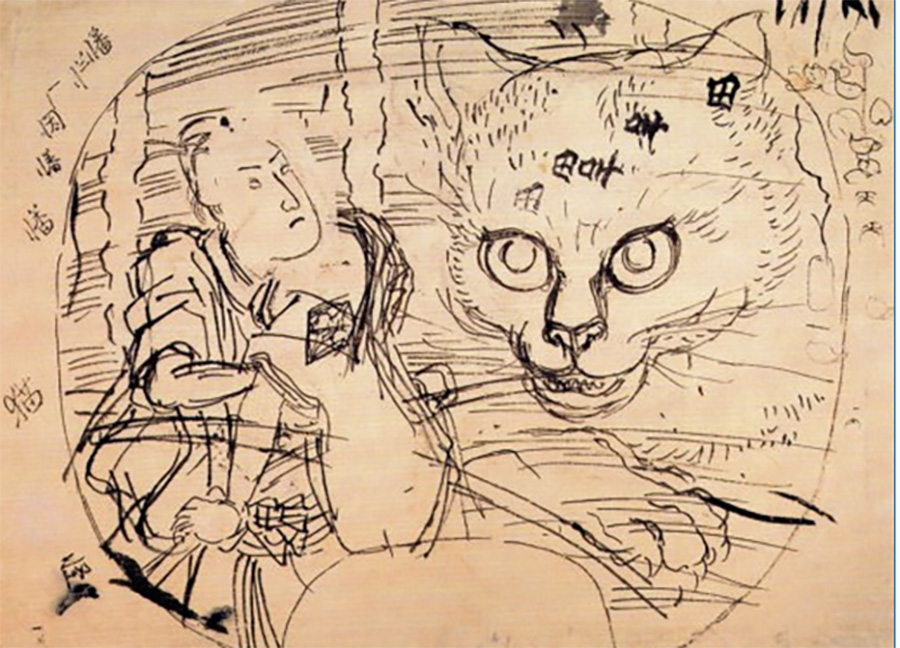
A theatrical figure confronts an enormous spectral cat whose wide eyes and looming face dominate the composition. Kuniyoshi combines humour, unease and exaggerated scale, turning the supernatural encounter into a vivid scene of dramatic tension and visual wit. |
The Actor Ichumura Meeting a Cat Ghost A theatrical figure confronts an enormous spectral cat whose wide eyes and looming face dominate the composition. Kuniyoshi combines humour, unease and exaggerated scale, turning the supernatural encounter into a vivid scene of dramatic tension and visual wit. Utagawa Kuniyoshi |
Close ×
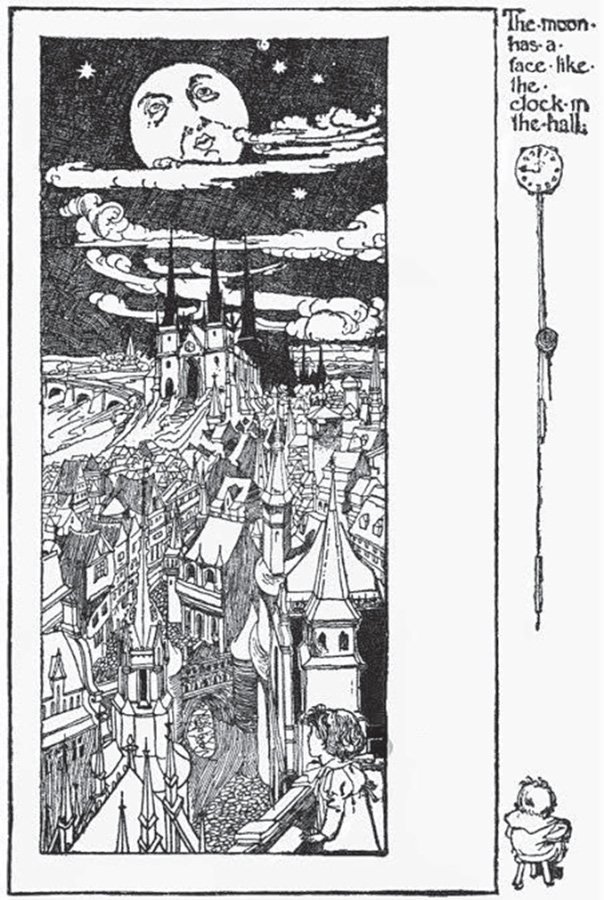
A moon with a human face hangs above a densely drawn town of steep roofs, towers and winding streets, while a child looks out across the scene from the foreground. The black-and-white illustration turns the familiar night sky into something theatrical and imaginative, matching the childlike wonder of Stevenson’s verse. |
Illustration for A Child’s Garden of Verses A moon with a human face hangs above a densely drawn town of steep roofs, towers and winding streets, while a child looks out across the scene from the foreground. The black-and-white illustration turns the familiar night sky into something theatrical and imaginative, matching the childlike wonder of Stevenson’s verse. Illustrator not identified in the archived caption |
Close ×
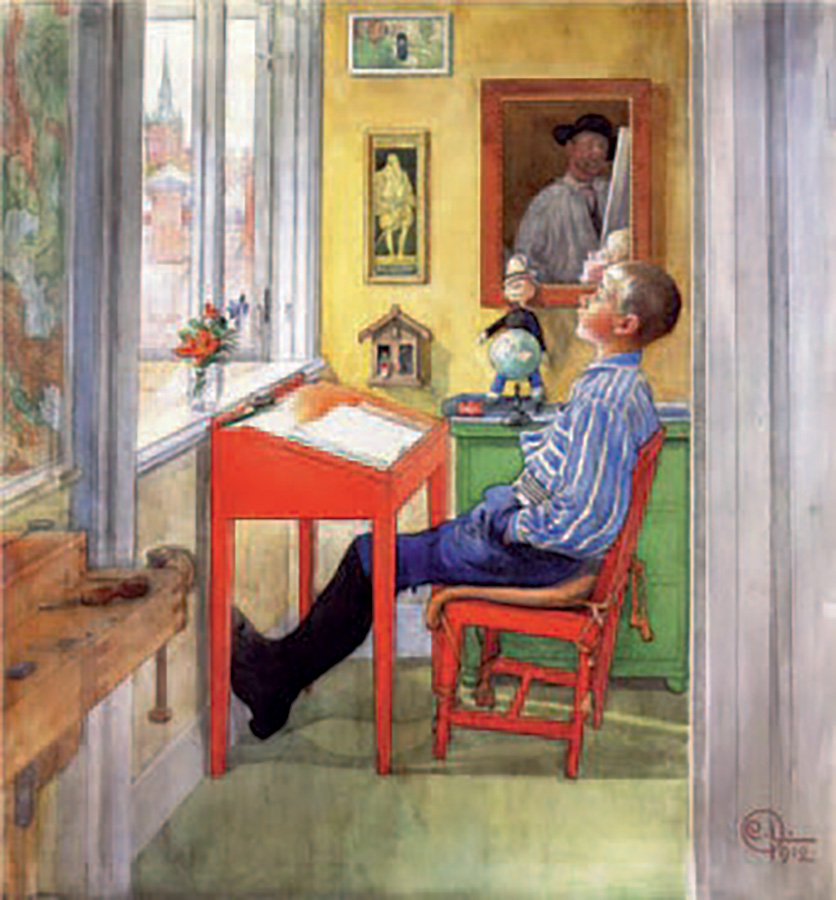
Carl Larsson depicts Esbjörn seated at a small red desk beside a bright window, absorbed in his work within the warm, carefully observed interior of the family home. The informal pose, colourful furnishings and abundance of domestic detail give the scene both intimacy and character, turning an ordinary moment of study into a lively portrait of childhood and home life. |
Esbjörn Doing His Homework Carl Larsson depicts Esbjörn seated at a small red desk beside a bright window, absorbed in his work within the warm, carefully observed interior of the family home. The informal pose, colourful furnishings and abundance of domestic detail give the scene both intimacy and character, turning an ordinary moment of study into a lively portrait of childhood and home life. Carl Larsson |
Close ×
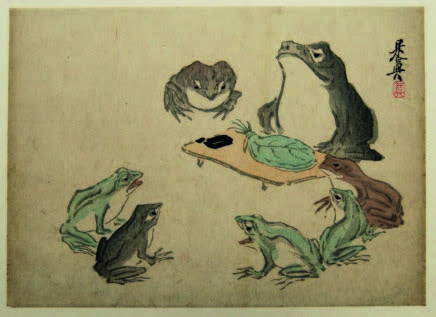
Zeshin gathers a small company of frogs around a low wooden platform, giving each creature its own alert posture and personality. The restrained palette and economical drawing make the scene feel light, observant and gently comic, while the arrangement has the composure of a miniature gathering or conversation. |
Frogs Zeshin gathers a small company of frogs around a low wooden platform, giving each creature its own alert posture and personality. The restrained palette and economical drawing make the scene feel light, observant and gently comic, while the arrangement has the composure of a miniature gathering or conversation. Shibata Zeshin |
Close ×
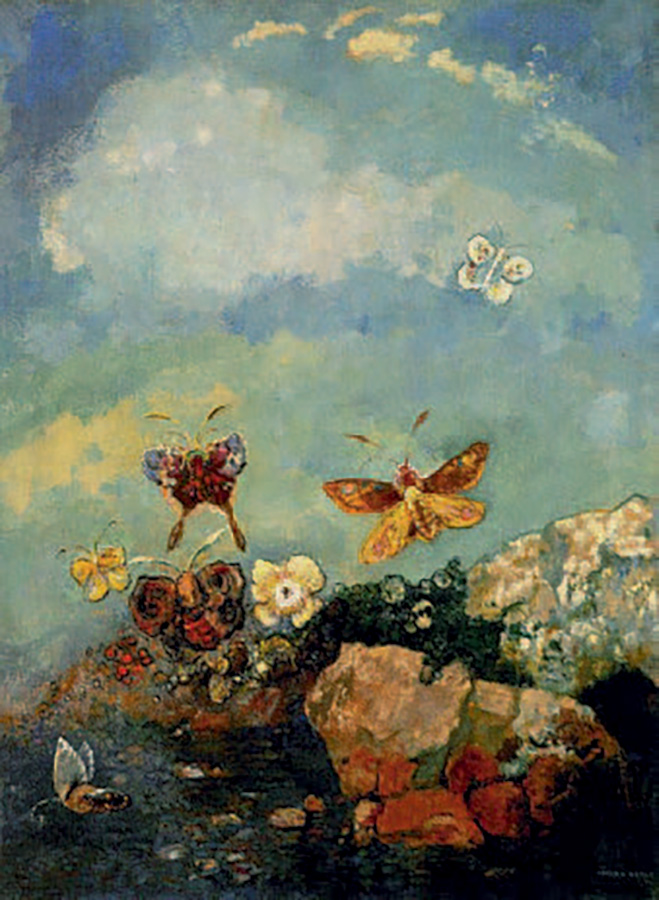
Butterflies and moth-like forms hover above flowers, stones and dark vegetation in a luminous, dreamlike landscape. Redon dissolves the boundary between close observation and imagination, allowing the insects to seem almost suspended in a coloured atmosphere of blue, green, gold and red. |
Butterflies Butterflies and moth-like forms hover above flowers, stones and dark vegetation in a luminous, dreamlike landscape. Redon dissolves the boundary between close observation and imagination, allowing the insects to seem almost suspended in a coloured atmosphere of blue, green, gold and red. Odilon Redon |
Close ×
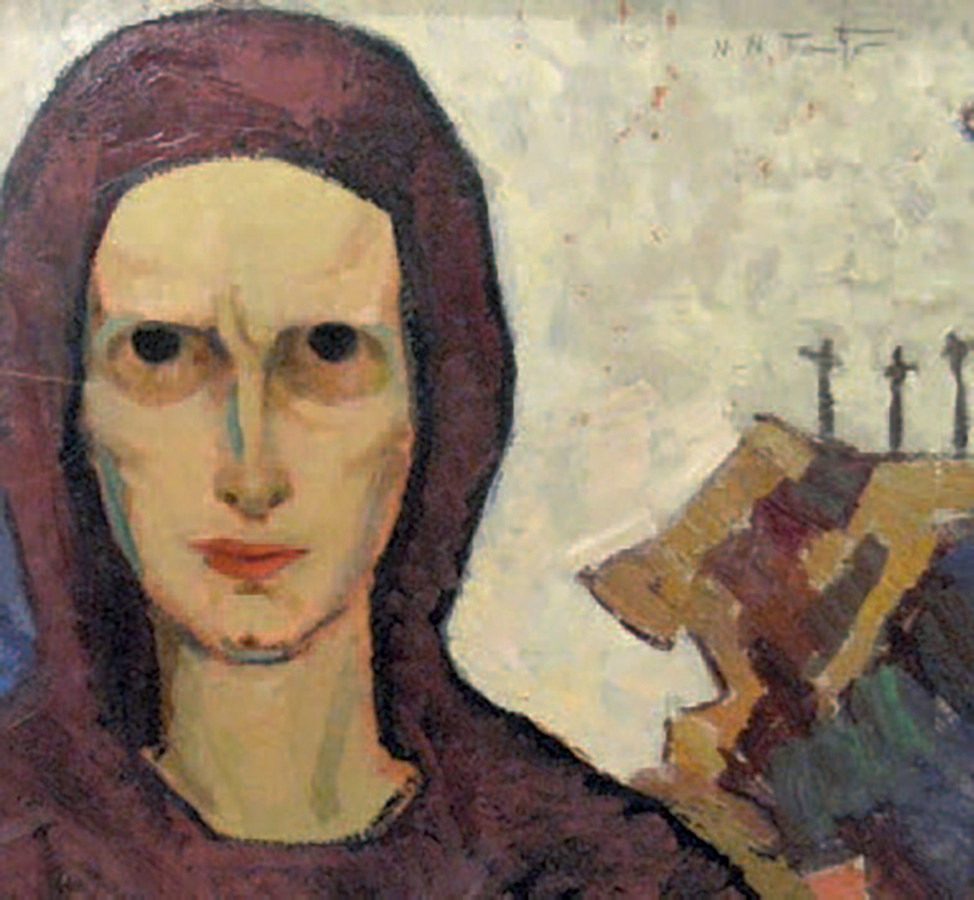
Tonitza presents a solemn, frontal figure against a pale, unsettled background, the face reduced to a few stark features and dark, hollowed eyes. Behind the figure, fragmentary forms suggest damage and disruption, giving the painting a quiet but powerful sense of aftermath, exhaustion and psychological weight. |
After War Tonitza presents a solemn, frontal figure against a pale, unsettled background, the face reduced to a few stark features and dark, hollowed eyes. Behind the figure, fragmentary forms suggest damage and disruption, giving the painting a quiet but powerful sense of aftermath, exhaustion and psychological weight. Nicolae Tonitza |
Close ×
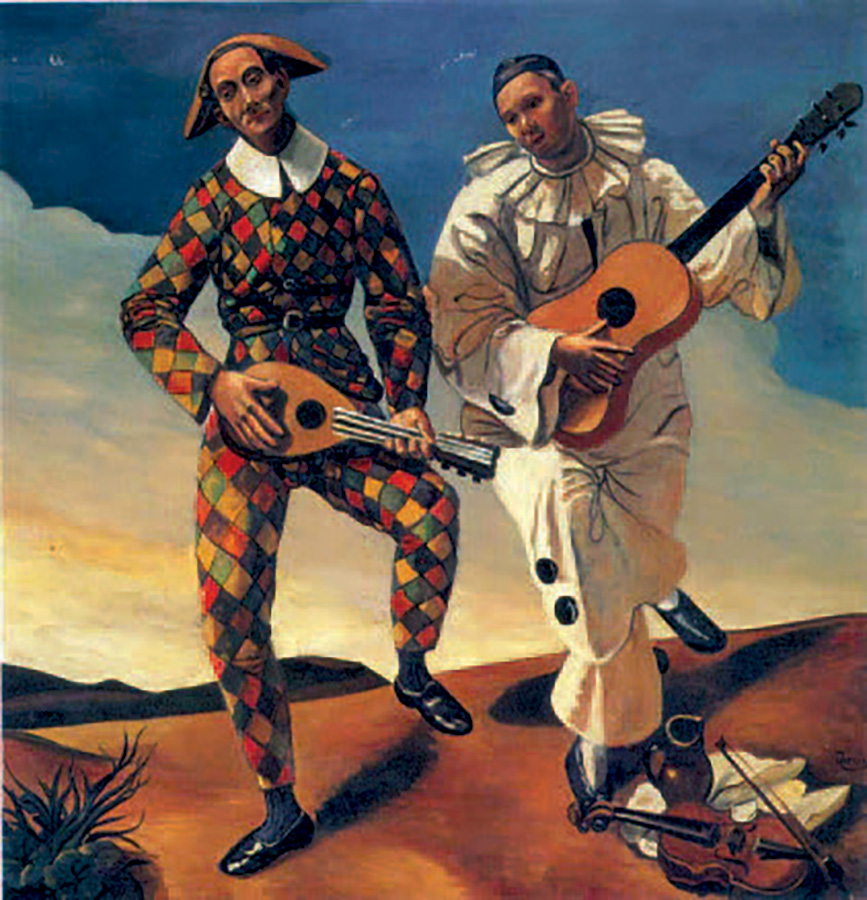
Derain sets Harlequin and Pierrot against an expansive blue sky, each figure carrying a stringed instrument and dressed in the unmistakable costumes of the commedia dell’arte. Their elongated poses and restrained expressions give the theatrical pair an oddly solemn presence, balancing colour, performance and melancholy within a deliberately staged composition. |
Arlequin et Pierrot Derain sets Harlequin and Pierrot against an expansive blue sky, each figure carrying a stringed instrument and dressed in the unmistakable costumes of the commedia dell’arte. Their elongated poses and restrained expressions give the theatrical pair an oddly solemn presence, balancing colour, performance and melancholy within a deliberately staged composition. André Derain |
Close ×
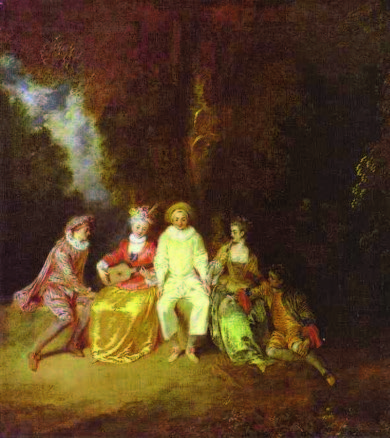
Watteau gathers Pierrot and his companions in a shadowed woodland setting, where pale theatrical costumes glow against the darker surroundings. The central figure’s luminous dress draws the eye, while the clustered group and subdued expressions temper the apparent gaiety of the scene with the wistful, slightly melancholy atmosphere characteristic of Watteau’s theatrical subjects. |
Happy Pierrot Watteau gathers Pierrot and his companions in a shadowed woodland setting, where pale theatrical costumes glow against the darker surroundings. The central figure’s luminous dress draws the eye, while the clustered group and subdued expressions temper the apparent gaiety of the scene with the wistful, slightly melancholy atmosphere characteristic of Watteau’s theatrical subjects. Antoine Watteau |
Close ×
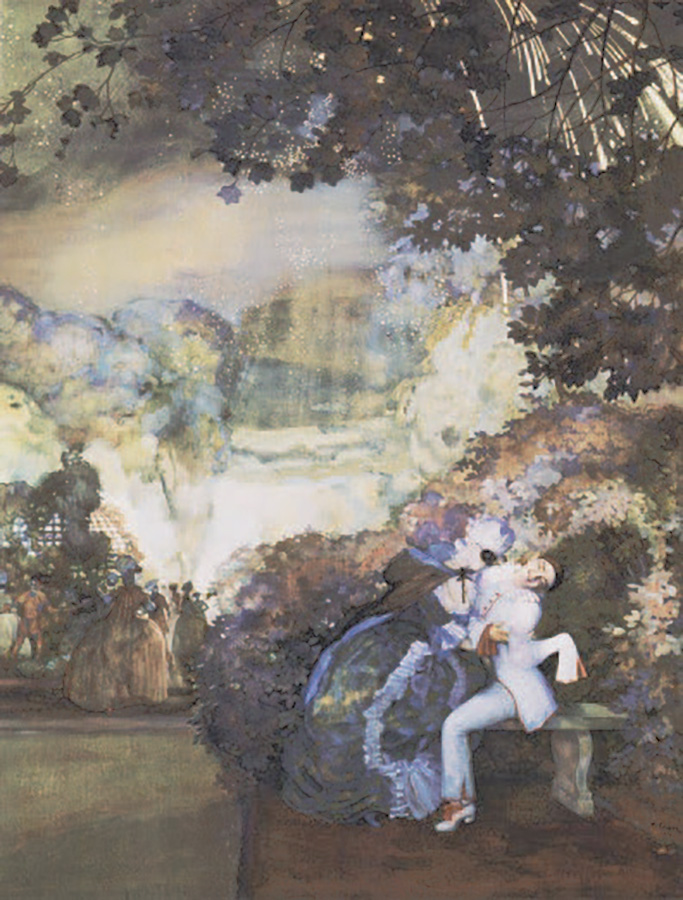
Somov places a lady and Pierrot in a dreamlike garden setting, where soft colour, distant figures and decorative foliage create an atmosphere of theatre, intimacy and reverie. The reclining Pierrot and the elegantly dressed woman suggest both playfulness and emotional delicacy, while the hazy landscape gives the scene its characteristic air of nostalgia and enchantment. |
Lady and Pierrot Somov places a lady and Pierrot in a dreamlike garden setting, where soft colour, distant figures and decorative foliage create an atmosphere of theatre, intimacy and reverie. The reclining Pierrot and the elegantly dressed woman suggest both playfulness and emotional delicacy, while the hazy landscape gives the scene its characteristic air of nostalgia and enchantment. Konstantin Somov |
Close ×
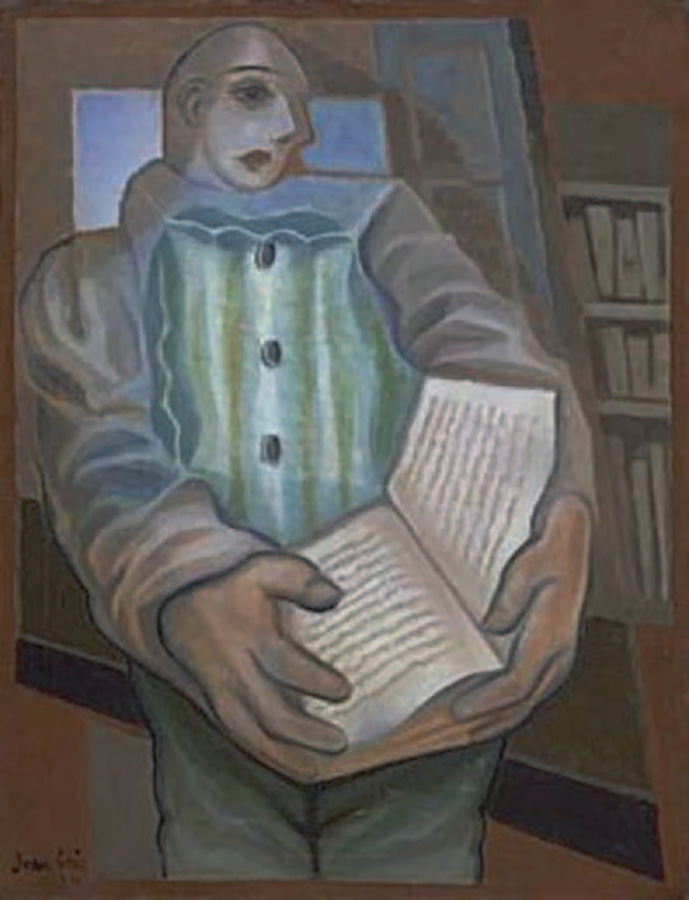
Gris presents Pierrot as a monumental, almost architectural figure holding an open book toward the viewer. Muted blues, greens and greys, simplified planes and the exaggerated scale of the hands give the familiar theatrical character an unusual gravity, turning the comic performer into a quiet figure of reading and reflection |
Pierrot with Book Gris presents Pierrot as a monumental, almost architectural figure holding an open book toward the viewer. Muted blues, greens and greys, simplified planes and the exaggerated scale of the hands give the familiar theatrical character an unusual gravity, turning the comic performer into a quiet figure of reading and reflection Juan Gris |
,Pierre-AugusteRenoir.jpg)
Close ×
Renoir paints the young Jean Renoir dressed as Pierrot, seated in a luminous white costume set against a soft, richly coloured background of violet and warm earth tones. The theatrical dress and poised pose give the child an air of performance, while the looseness of Renoir’s brushwork preserves the tenderness and immediacy of a domestic portrait. |
The White Pierrot (Jean Renoir) Renoir paints the young Jean Renoir dressed as Pierrot, seated in a luminous white costume set against a soft, richly coloured background of violet and warm earth tones. The theatrical dress and poised pose give the child an air of performance, while the looseness of Renoir’s brushwork preserves the tenderness and immediacy of a domestic portrait. Pierre-Auguste Renoir |
Close ×
Description
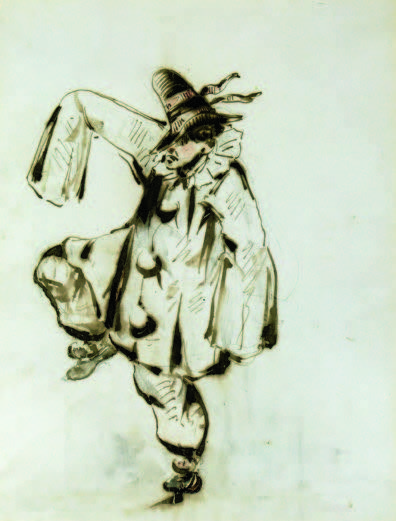
Manet captures Pierrot in mid-movement with a few swift, expressive lines, reducing costume and gesture to their most essential forms. The lightness of the drawing and the lifted pose give the figure a playful, improvisatory energy, as though the dance has been caught in a single fleeting moment. |
Pierrot Dancing Description Manet captures Pierrot in mid-movement with a few swift, expressive lines, reducing costume and gesture to their most essential forms. The lightness of the drawing and the lifted pose give the figure a playful, improvisatory energy, as though the dance has been caught in a single fleeting moment. Édouard Manet |
Close ×
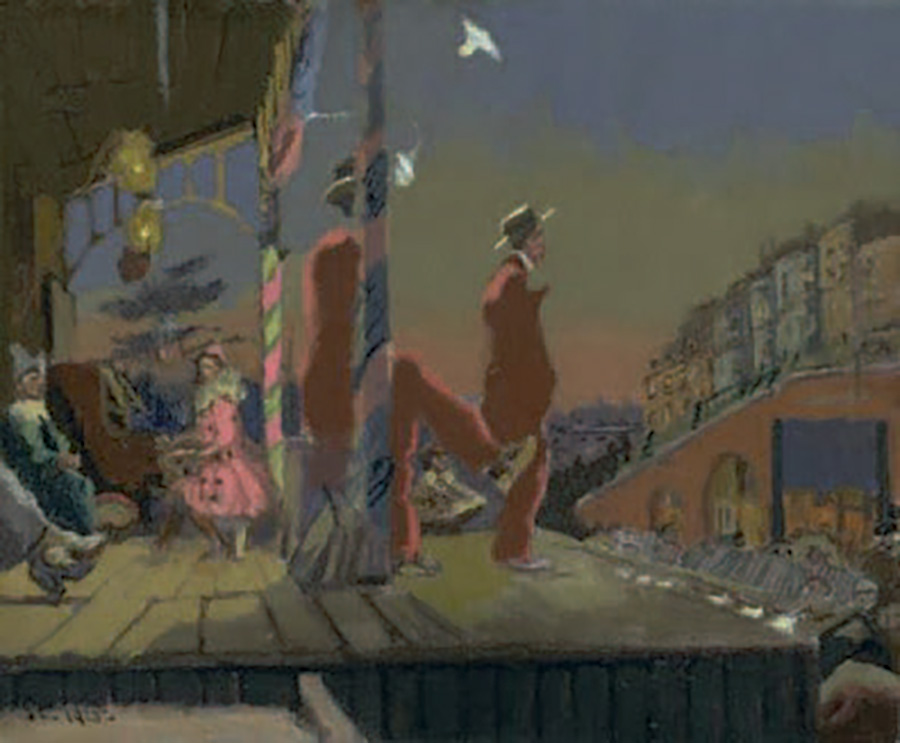
Sickert captures a seaside performance in progress, with costumed figures on a small stage beneath the evening sky and the architecture of Brighton stretching away behind them. The loose handling and muted colour give the scene an atmospheric, slightly melancholy quality, balancing entertainment with the sense of a fleeting moment observed from the edge of the crowd. |
Brighton Pierrots Sickert captures a seaside performance in progress, with costumed figures on a small stage beneath the evening sky and the architecture of Brighton stretching away behind them. The loose handling and muted colour give the scene an atmospheric, slightly melancholy quality, balancing entertainment with the sense of a fleeting moment observed from the edge of the crowd. Walter Sickert |
Close ×
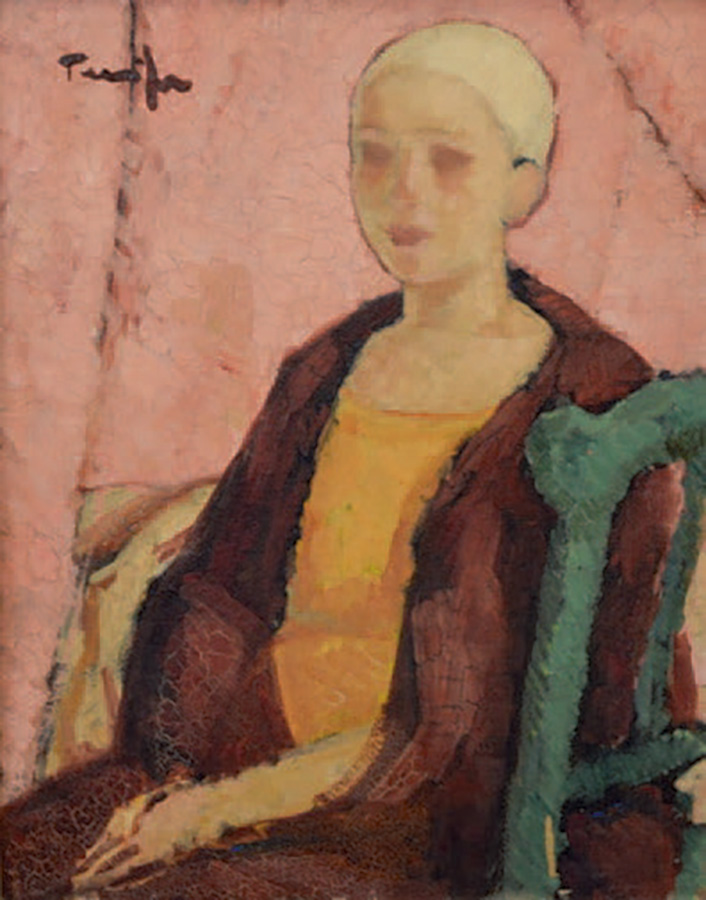
Tonitza presents the clown as a quiet, inward-looking figure rather than a performer in action. Seated against a warm pink ground, the simplified face, muted expression and broad areas of colour give the portrait an air of stillness and introspection, suggesting the private self behind the theatrical role. |
Clown Tonitza presents the clown as a quiet, inward-looking figure rather than a performer in action. Seated against a warm pink ground, the simplified face, muted expression and broad areas of colour give the portrait an air of stillness and introspection, suggesting the private self behind the theatrical role. Nicolae Tonitza |
Close ×
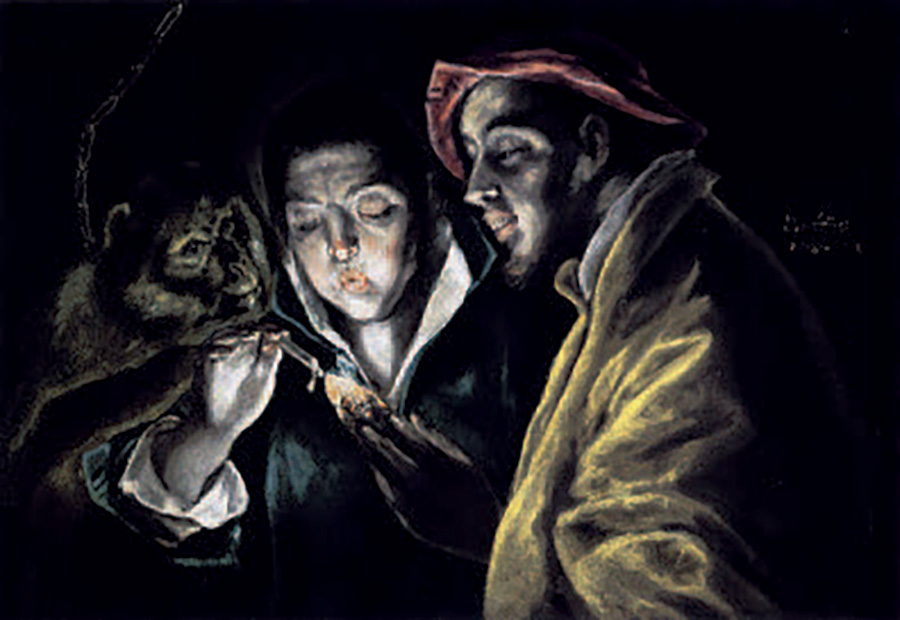
El Greco gathers three figures around the small flare of a candle: a boy intent on the flame, a fool leaning close beside him, and an ape emerging from the darkness. The concentrated light throws faces and hands into sharp relief, giving the scene an eerie, theatrical intensity while its unusual company lends the image the character of a moral or enigmatic fable. |
Allegory (Boy Lighting a Candle in the Company of an Ape and a Fool) El Greco gathers three figures around the small flare of a candle: a boy intent on the flame, a fool leaning close beside him, and an ape emerging from the darkness. The concentrated light throws faces and hands into sharp relief, giving the scene an eerie, theatrical intensity while its unusual company lends the image the character of a moral or enigmatic fable. El Greco |
Close ×
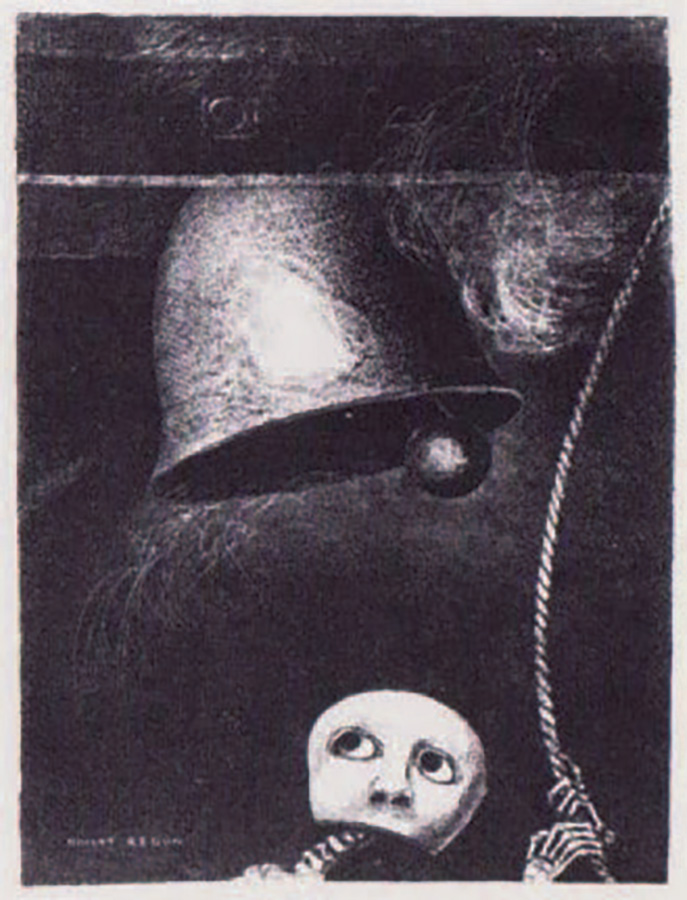
Redon creates an unsettling nocturnal image in which a pale funeral mask emerges beneath a large bell suspended in darkness. Rope, bell and mask are isolated against the shadowed ground, giving the composition the atmosphere of a private vision or nightmare, where sound, death and ritual seem to meet |
A Funeral Mask Tolls Bell Redon creates an unsettling nocturnal image in which a pale funeral mask emerges beneath a large bell suspended in darkness. Rope, bell and mask are isolated against the shadowed ground, giving the composition the atmosphere of a private vision or nightmare, where sound, death and ritual seem to meet Odilon Redon |
Close ×
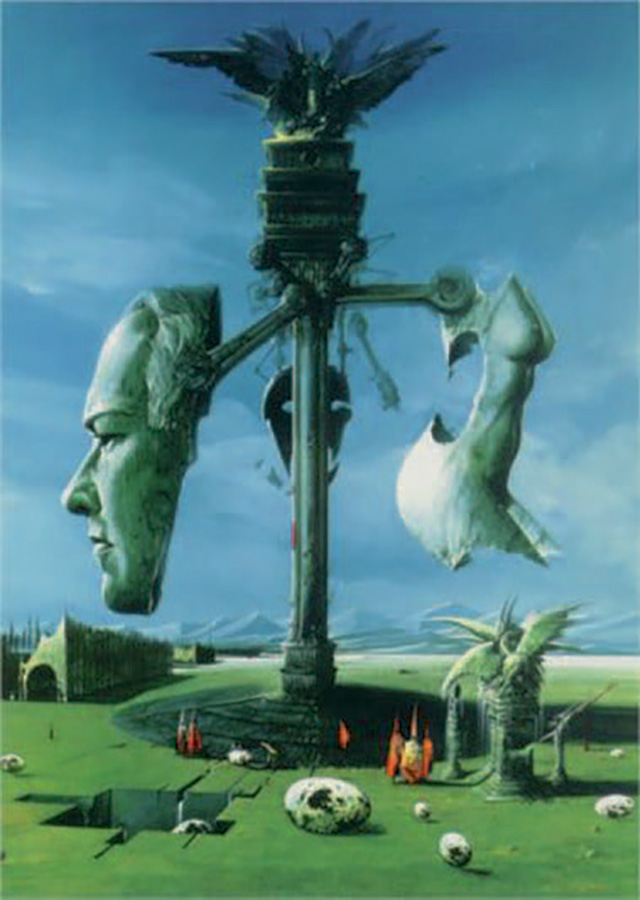
Siudmak creates a surreal landscape dominated by a strange balance-like structure, from which fragmented forms hang against a luminous blue sky. A monumental human head, a suspended white shape and scattered architectural and organic elements give the scene an atmosphere of metaphysical inquiry, as though the visible world were being used to weigh memory, spirit and thought. |
Weight of the Soul Siudmak creates a surreal landscape dominated by a strange balance-like structure, from which fragmented forms hang against a luminous blue sky. A monumental human head, a suspended white shape and scattered architectural and organic elements give the scene an atmosphere of metaphysical inquiry, as though the visible world were being used to weigh memory, spirit and thought. Wojciech Siudmak |
Close ×
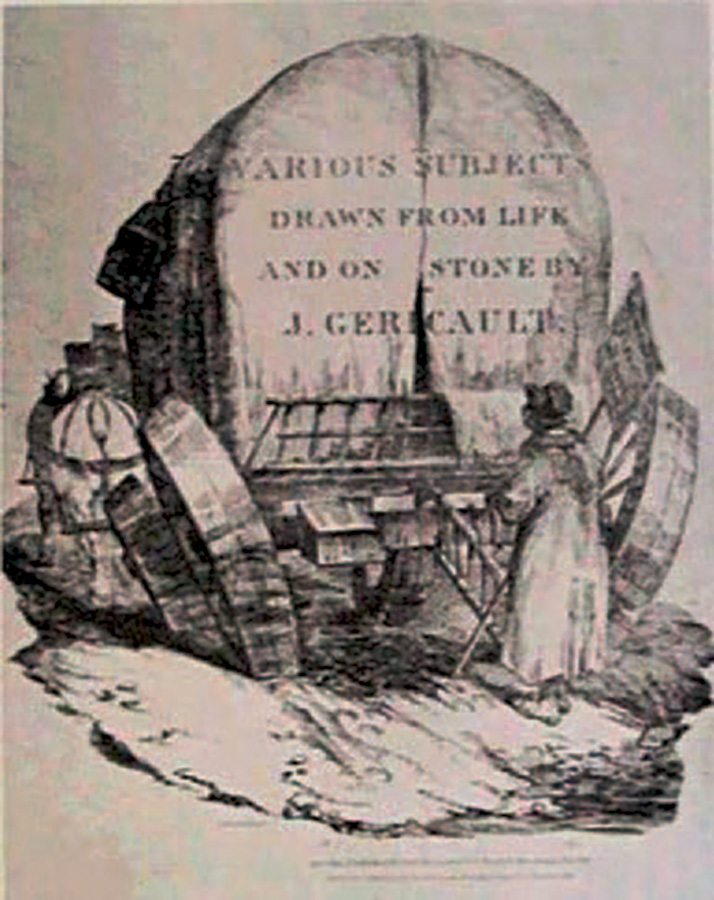
A monochrome lithographic composition combines figures, buildings and landscape around a large central stone-like form bearing printed text. The image has the character of an illustrated title or frontispiece, bringing together everyday observation and theatrical arrangement within a compact architectural scene. |
A Hitched Wagon A monochrome lithographic composition combines figures, buildings and landscape around a large central stone-like form bearing printed text. The image has the character of an illustrated title or frontispiece, bringing together everyday observation and theatrical arrangement within a compact architectural scene. Théodore Géricault |
Close ×
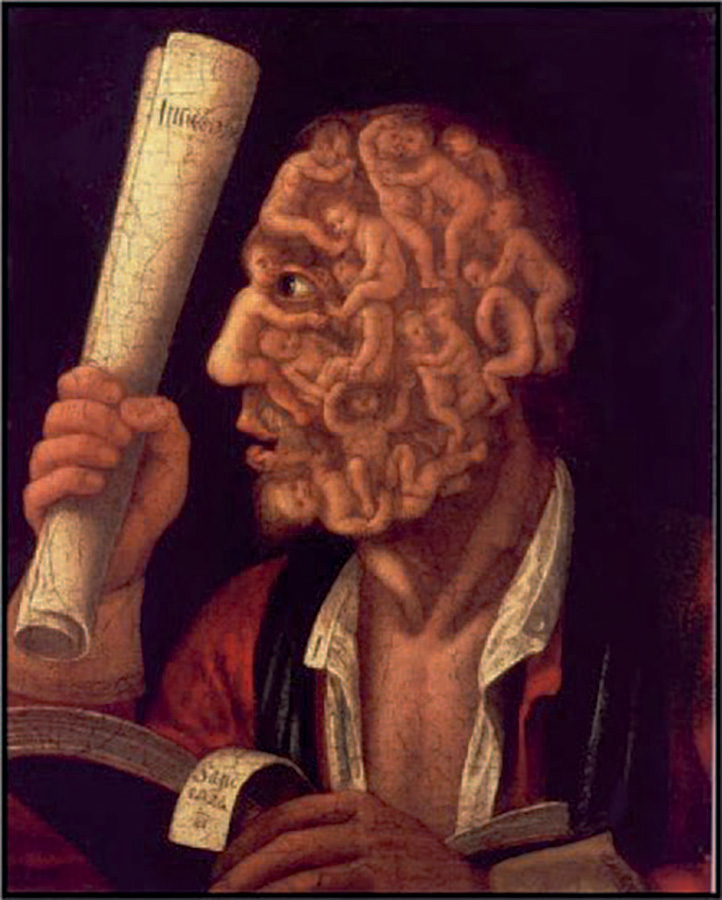
Arcimboldo constructs the sitter’s face from a mass of small human figures, turning portraiture into an elaborate visual puzzle. The profile remains immediately readable even as the features dissolve into bodies, limbs and gestures, creating an image that is ingenious, unsettling and darkly comic. The scroll and open book reinforce the sense of a learned or allegorical figure. |
Portrait of Adam Arcimboldo constructs the sitter’s face from a mass of small human figures, turning portraiture into an elaborate visual puzzle. The profile remains immediately readable even as the features dissolve into bodies, limbs and gestures, creating an image that is ingenious, unsettling and darkly comic. The scroll and open book reinforce the sense of a learned or allegorical figure. Giuseppe Arcimboldo |
Close ×
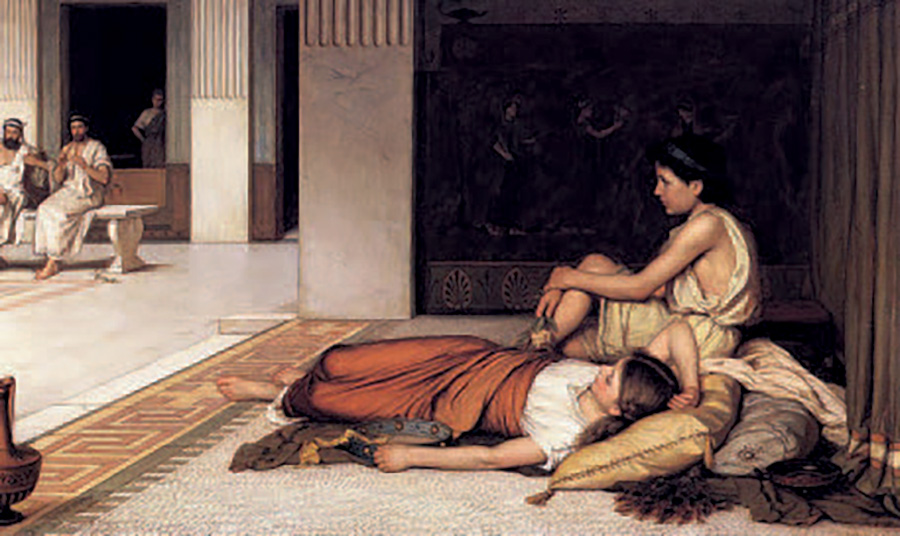
Waterhouse sets the aftermath of performance within a classical interior, where one young woman reclines exhausted across cushions while another sits beside her in quiet attendance. The open architectural space, distant figures and richly observed fabrics give the scene both theatrical context and intimacy, turning the moment after public display into something private, human and reflective. |
After the Dance Waterhouse sets the aftermath of performance within a classical interior, where one young woman reclines exhausted across cushions while another sits beside her in quiet attendance. The open architectural space, distant figures and richly observed fabrics give the scene both theatrical context and intimacy, turning the moment after public display into something private, human and reflective. John William Waterhouse |
Close ×
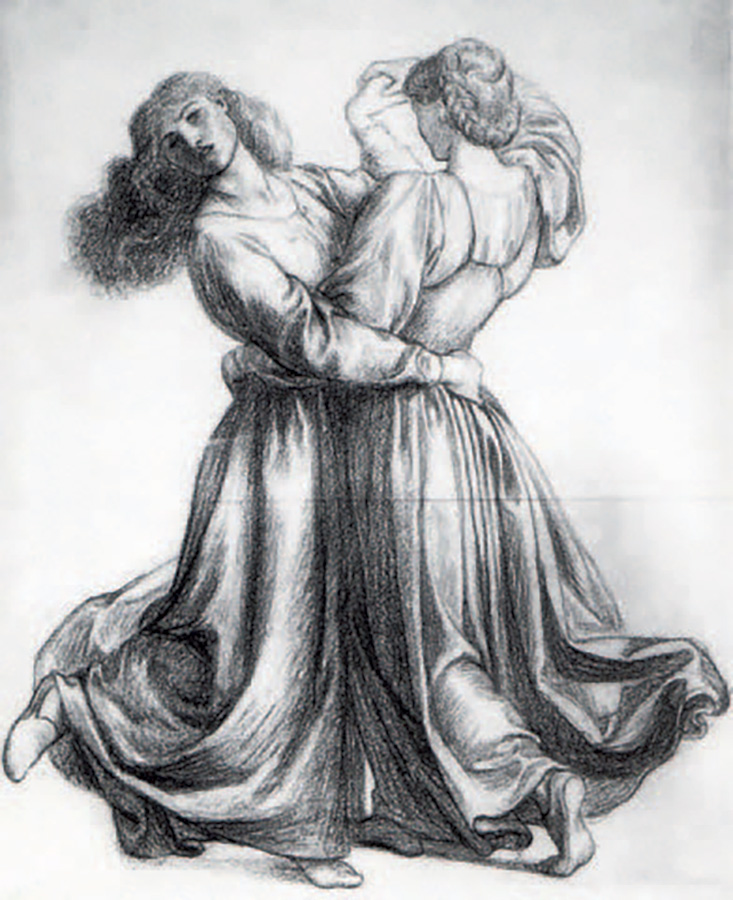
Rossetti studies two women caught in the movement of a dance, their bodies turning together as their dresses sweep into broad, rhythmic folds. The drawing concentrates on gesture, balance and the flow of fabric, giving the figures a sense of suspended motion while preserving the intimacy and elegance characteristic of Rossetti’s figure studies. |
The Bower Meadow Study (Study of Dancing Girls) Rossetti studies two women caught in the movement of a dance, their bodies turning together as their dresses sweep into broad, rhythmic folds. The drawing concentrates on gesture, balance and the flow of fabric, giving the figures a sense of suspended motion while preserving the intimacy and elegance characteristic of Rossetti’s figure studies. Dante Gabriel Rossetti |
Close ×
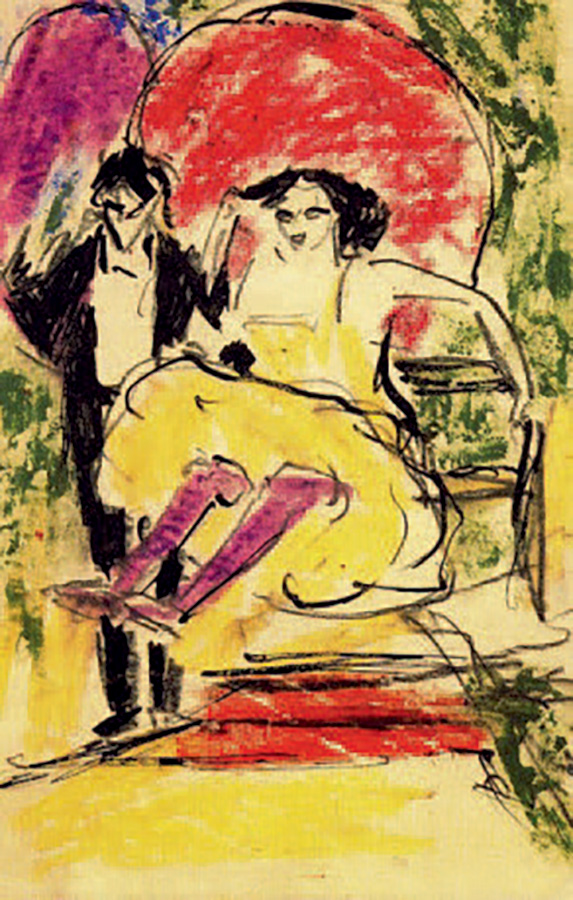
Kirchner depicts a dancing couple in a scene of cabaret-like energy, using vivid colour, broken line and abbreviated form to suggest movement, performance and urban excitement. The seated woman’s yellow dress, pink stockings and bold red backdrop dominate the composition, while the male figure beside her appears as a dark, angular counterpoint, giving the image its characteristic Expressionist tension and liveliness. |
Dancing Couple of the Variety Kirchner depicts a dancing couple in a scene of cabaret-like energy, using vivid colour, broken line and abbreviated form to suggest movement, performance and urban excitement. The seated woman’s yellow dress, pink stockings and bold red backdrop dominate the composition, while the male figure beside her appears as a dark, angular counterpoint, giving the image its characteristic Expressionist tension and liveliness. Ernst Ludwig Kirchner |
Close ×
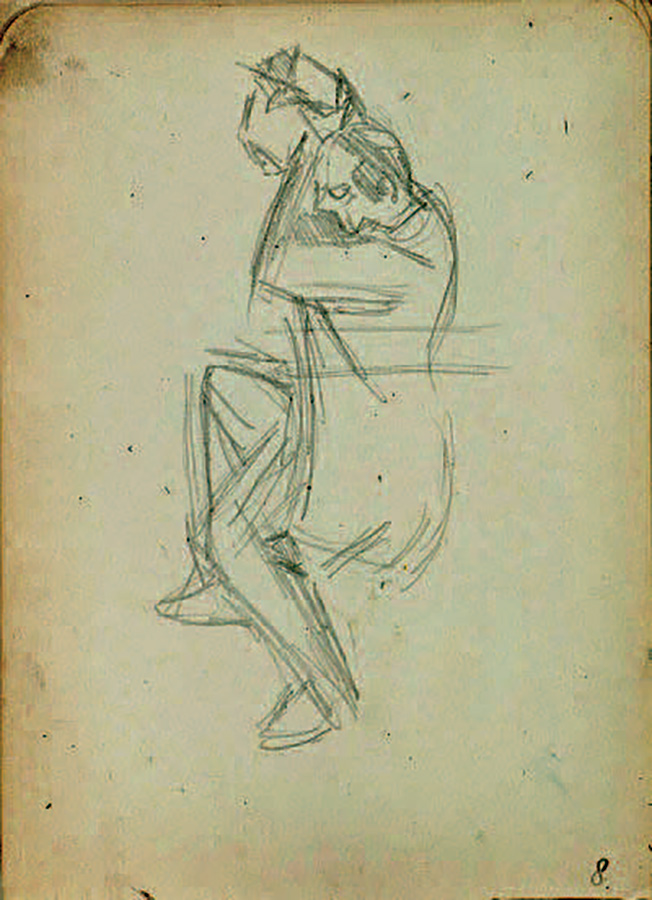
This spare sketch captures a dancing man in a few quick, economical lines, reducing the figure almost to gesture alone. With one arm raised and the body twisted into motion, the drawing has the immediacy of a notebook study, preserving both the energy of movement and the artist’s close attention to form. |
Dancing Man from Sketchbook 60 This spare sketch captures a dancing man in a few quick, economical lines, reducing the figure almost to gesture alone. With one arm raised and the body twisted into motion, the drawing has the immediacy of a notebook study, preserving both the energy of movement and the artist’s close attention to form. Theo van Doesburg |
Close ×
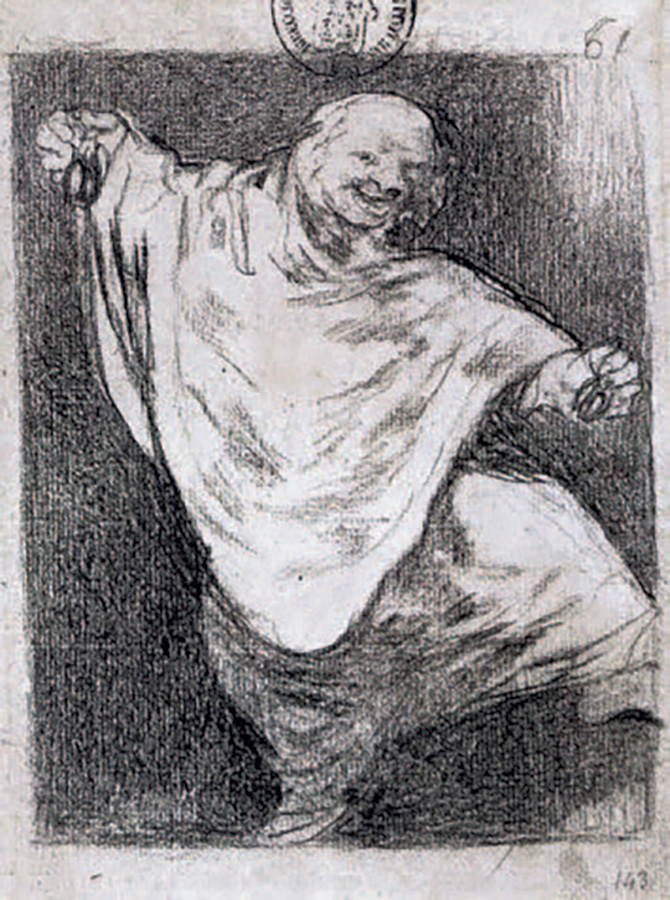
Goya depicts a ghostly, animated figure caught mid-dance, arms spread wide as castanets click in either hand. The rough tonal contrasts and unstable, spectral form give the image a strange mixture of humour and unease, turning the dance into something theatrical, grotesque and unsettlingly alive. |
Phantom Dancing with Castanets Goya depicts a ghostly, animated figure caught mid-dance, arms spread wide as castanets click in either hand. The rough tonal contrasts and unstable, spectral form give the image a strange mixture of humour and unease, turning the dance into something theatrical, grotesque and unsettlingly alive. Francisco Goya |
Close ×
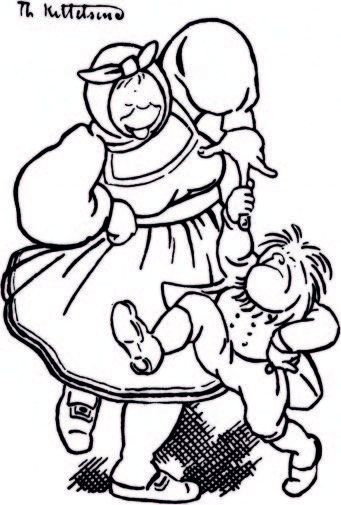
Kittelsen turns the folkloric troll into a scene of comic movement, showing the large, broad-skirted figure dancing with a small child clutched at its side. The bold black line, exaggerated forms and lively pose give the drawing both humour and a slightly unruly fairy-tale energy. |
Dancing Troll Kittelsen turns the folkloric troll into a scene of comic movement, showing the large, broad-skirted figure dancing with a small child clutched at its side. The bold black line, exaggerated forms and lively pose give the drawing both humour and a slightly unruly fairy-tale energy. Theodor Severin Kittelsen |
|
Close ×
Rossetti studies two women caught in the movement of a dance, their bodies turning together as their dresses sweep into broad, rhythmic folds. The drawing concentrates on gesture, balance and the flow of fabric, giving the figures a sense of suspended motion while preserving the intimacy and elegance characteristic of Rossetti’s figure studies. |
The Bower Meadow Study (Study of Dancing Girls) Rossetti studies two women caught in the movement of a dance, their bodies turning together as their dresses sweep into broad, rhythmic folds. The drawing concentrates on gesture, balance and the flow of fabric, giving the figures a sense of suspended motion while preserving the intimacy and elegance characteristic of Rossetti’s figure studies. Dante Gabriel Rossetti |
Close ×
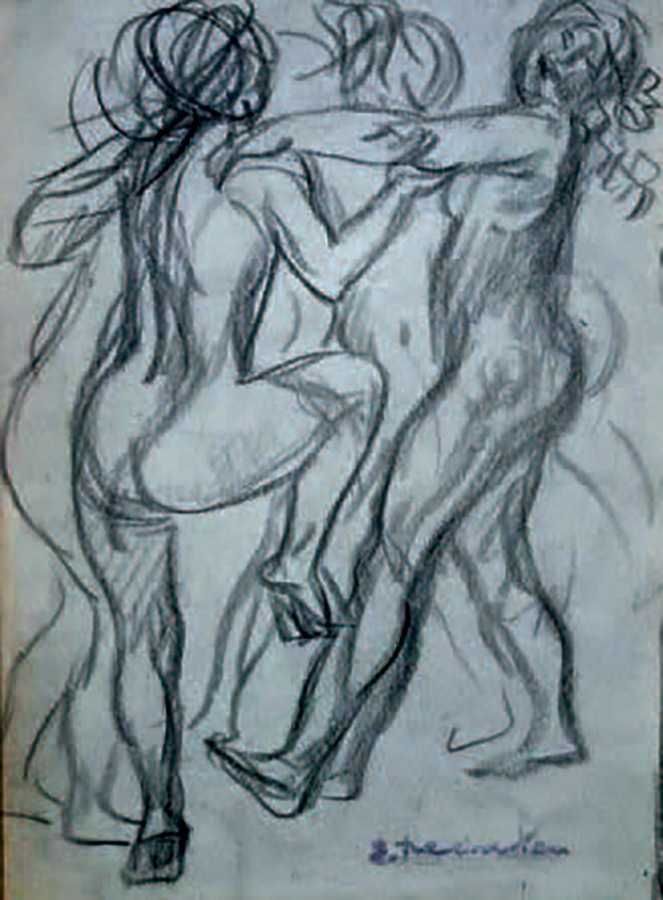
Steinlen sketches three nude women in motion, their bodies turning and crossing in a study of rhythm, balance and gesture. The loose charcoal-like lines and unfinished contours give the drawing an immediacy that suits the subject, capturing the energy of dance rather than fixing the figures into a polished academic pose. |
Three Nude Women Dancing Steinlen sketches three nude women in motion, their bodies turning and crossing in a study of rhythm, balance and gesture. The loose charcoal-like lines and unfinished contours give the drawing an immediacy that suits the subject, capturing the energy of dance rather than fixing the figures into a polished academic pose. Théophile Steinlen |
Close ×
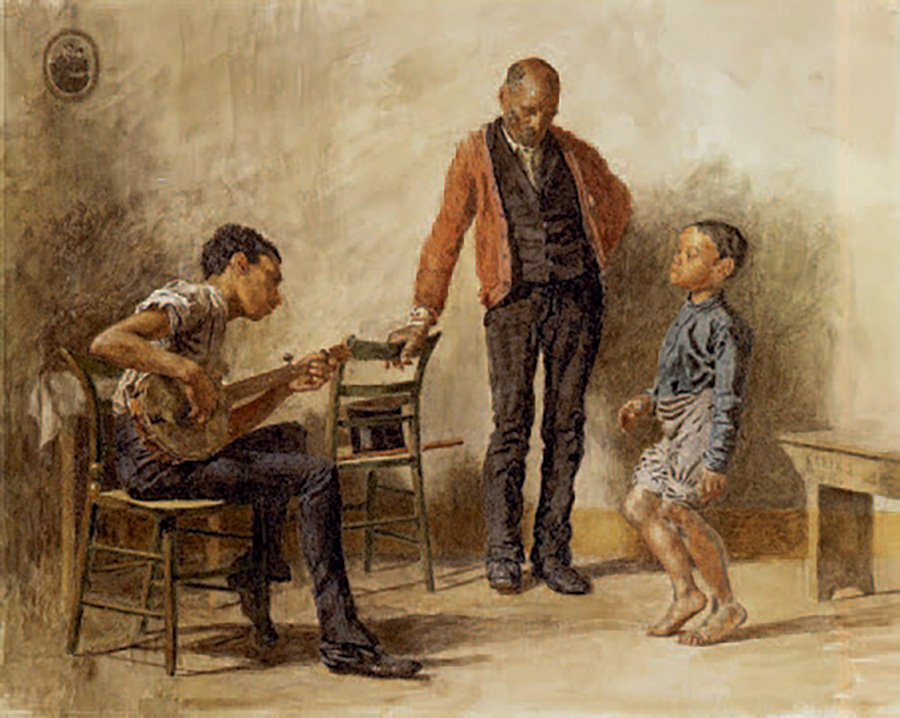
Eakins depicts an intimate domestic scene in which music, instruction and movement come together: a seated musician plays while a standing older figure watches a child learning to dance. The quiet interior, natural poses and careful observation of gesture give the work its warmth, while the arrangement of the three figures turns an ordinary lesson into a study of concentration, guidance and performance. |
The Dancing Lesson Eakins depicts an intimate domestic scene in which music, instruction and movement come together: a seated musician plays while a standing older figure watches a child learning to dance. The quiet interior, natural poses and careful observation of gesture give the work its warmth, while the arrangement of the three figures turns an ordinary lesson into a study of concentration, guidance and performance. Thomas Eakins |
Close ×
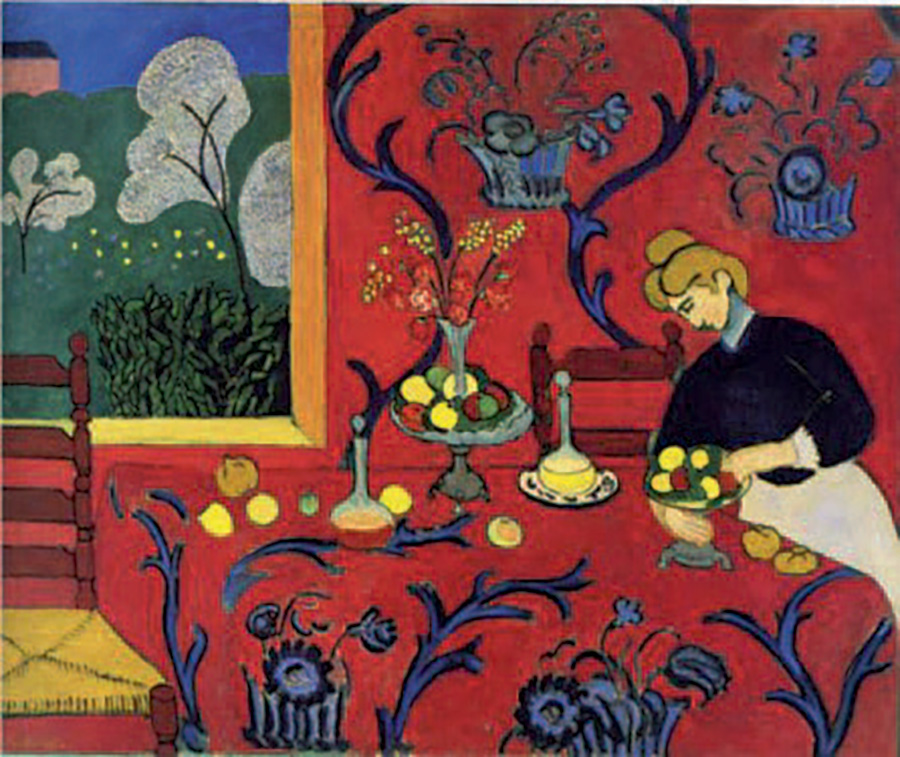
Matisse turns a domestic interior into a field of saturated colour, allowing the red tablecloth and red wall to merge into one continuous decorative surface. The servant arranging fruit, the view through the window and the curling blue floral pattern create a scene in which everyday life, landscape and ornament are held together by rhythm rather than conventional depth. |
Harmony in Red Matisse turns a domestic interior into a field of saturated colour, allowing the red tablecloth and red wall to merge into one continuous decorative surface. The servant arranging fruit, the view through the window and the curling blue floral pattern create a scene in which everyday life, landscape and ornament are held together by rhythm rather than conventional depth. Henri Matisse |
Close ×
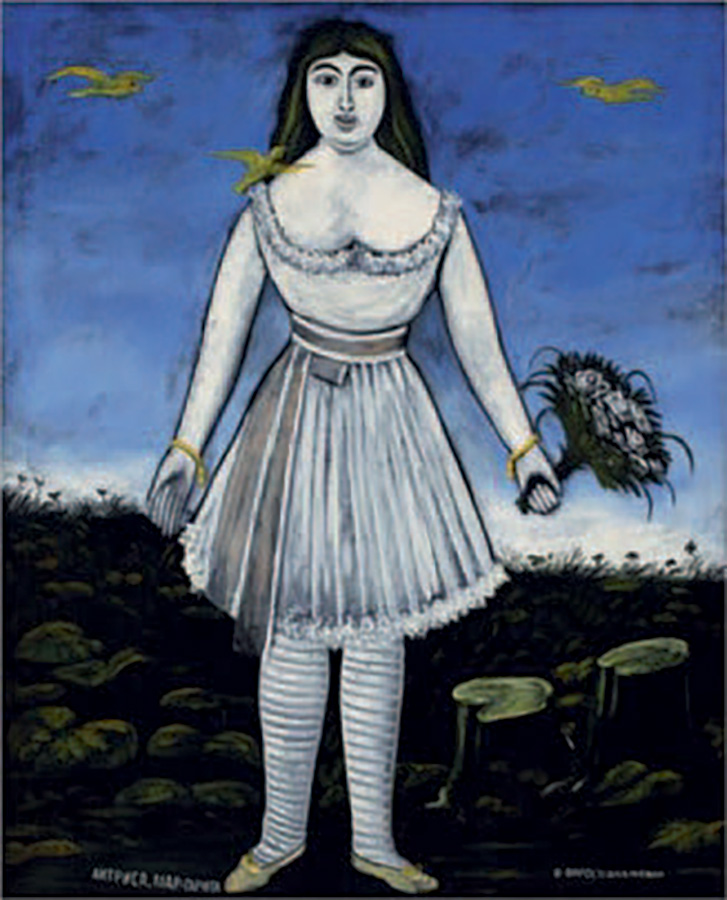
Against a deep blue sky and darkened landscape, Pirosmani presents Margaret frontally and almost ceremonially, her pale dress and striped stockings giving the figure a theatrical stillness. Birds cross the sky while she holds a bouquet at her side, creating an image that is both direct and strangely dreamlike. |
Actress Margaret Against a deep blue sky and darkened landscape, Pirosmani presents Margaret frontally and almost ceremonially, her pale dress and striped stockings giving the figure a theatrical stillness. Birds cross the sky while she holds a bouquet at her side, creating an image that is both direct and strangely dreamlike. Niko Pirosmani |
Close ×
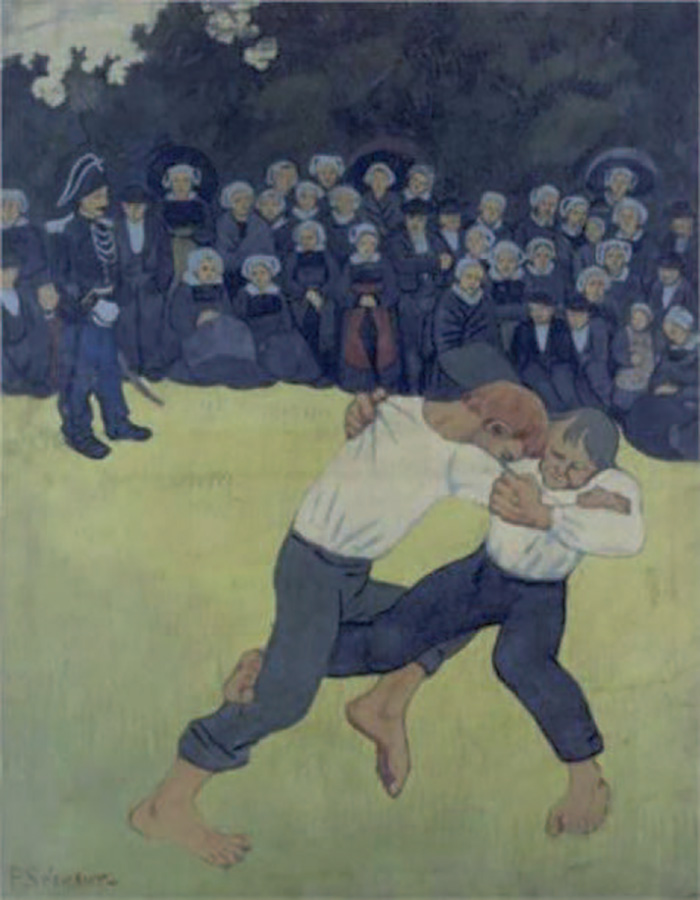
Sérusier places two barefoot wrestlers at the centre of a broad green field while a densely packed crowd of Breton spectators watches from behind. The simplified forms, flattened space and muted colour give the scene a strong decorative rhythm, while the locked bodies of the wrestlers provide the composition with its physical tension and focus. |
The Wrestling Bretons Sérusier places two barefoot wrestlers at the centre of a broad green field while a densely packed crowd of Breton spectators watches from behind. The simplified forms, flattened space and muted colour give the scene a strong decorative rhythm, while the locked bodies of the wrestlers provide the composition with its physical tension and focus. Paul Sérusier |
Close ×
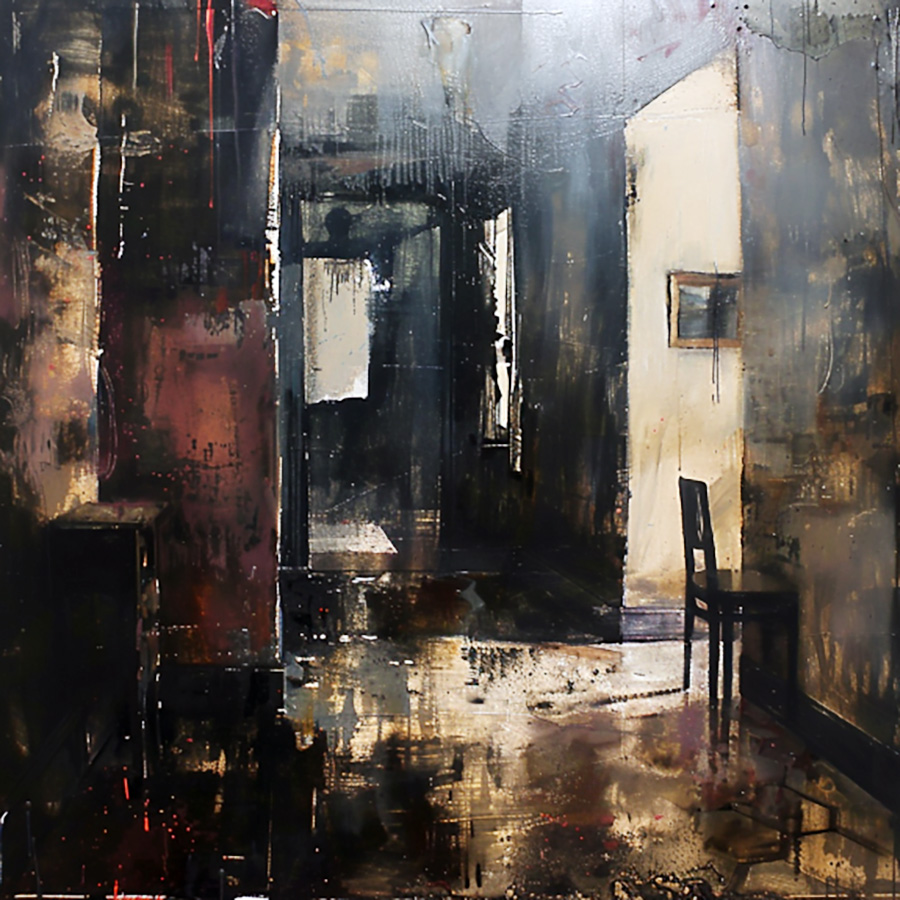
A shadowed interior opens through a sequence of doorways and reflected surfaces, with a solitary chair anchoring the brighter space beyond. The image moves between the tangible and the abstract, the domestic and the atmospheric, using fractured light, dark architectural forms and painterly textures to make an ordinary interior feel expansive and slightly mysterious. |
Interior Passage A shadowed interior opens through a sequence of doorways and reflected surfaces, with a solitary chair anchoring the brighter space beyond. The image moves between the tangible and the abstract, the domestic and the atmospheric, using fractured light, dark architectural forms and painterly textures to make an ordinary interior feel expansive and slightly mysterious. AI-generated image, created for The Linnet’s Wings archive |
Close ×
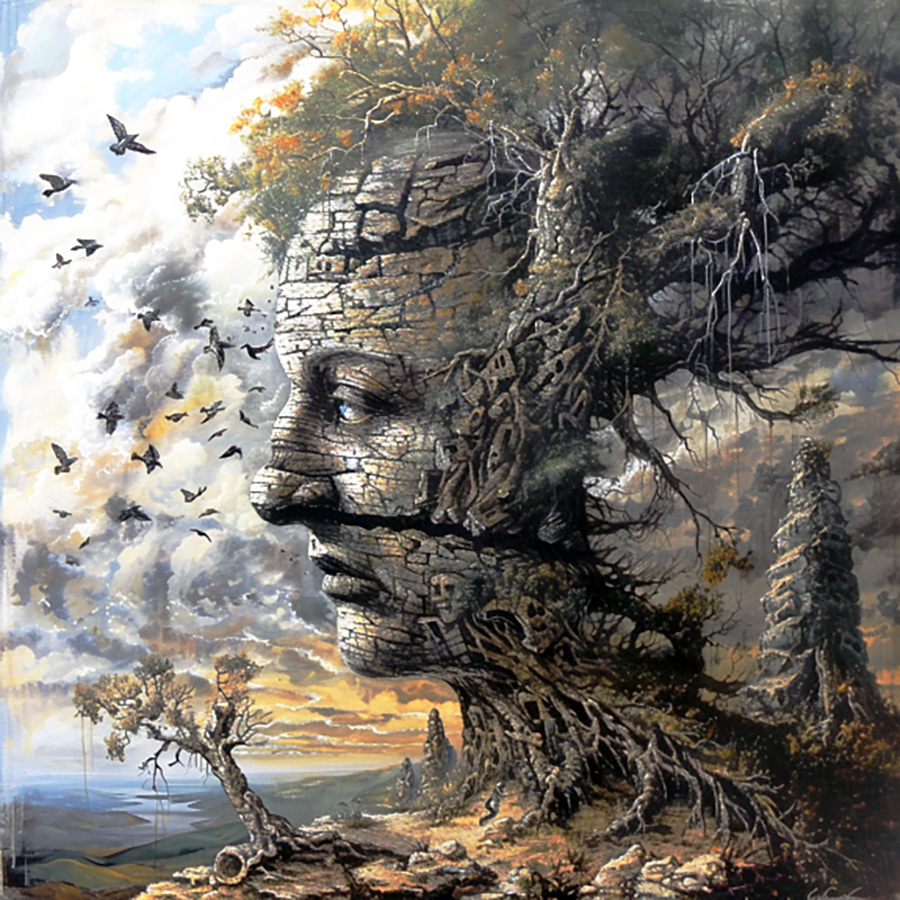
A monumental human profile appears to grow from stone, roots and ancient trees, its features merging with the landscape while birds sweep across a turbulent sky. The image turns wind into something both elemental and sentient, linking face, forest, rock and weather in a single imaginative form. |
The Wind A monumental human profile appears to grow from stone, roots and ancient trees, its features merging with the landscape while birds sweep across a turbulent sky. The image turns wind into something both elemental and sentient, linking face, forest, rock and weather in a single imaginative form. AI-generated image created with Midjourney for The Linnet’s Wings House Art |
Close ×
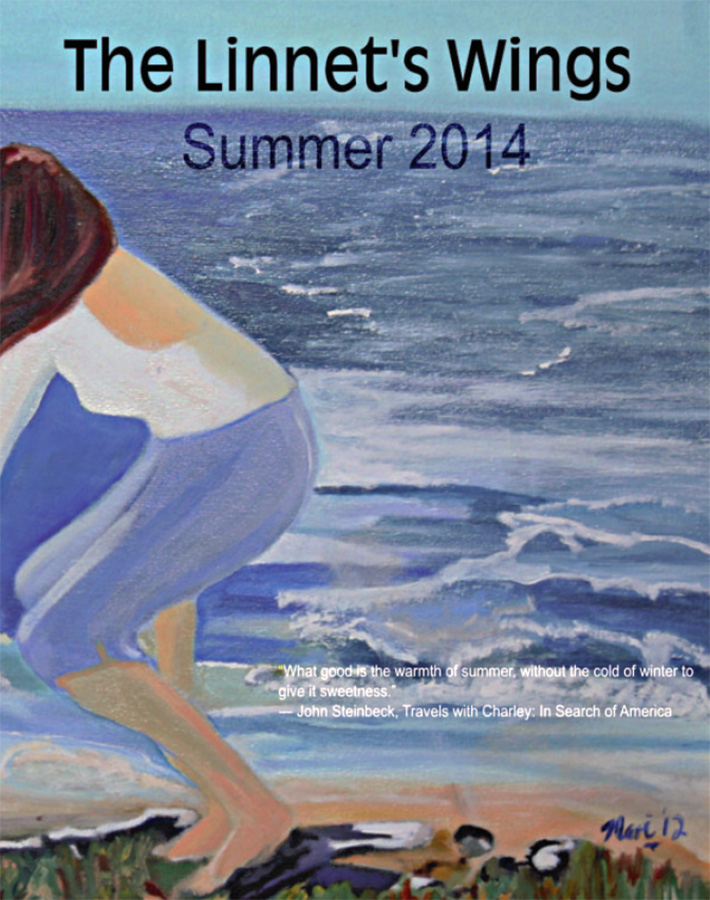
The Summer 2014 cover looks out across the Mediterranean from La Chucha, Motril, with a loosely painted figure bending toward the shoreline amid rock, surf and intense bands of blue. The expansive sea dominates the composition, while the informal figure and hand-painted treatment give the cover the feeling of a remembered summer moment rather than a conventional magazine illustration. A quotation from John Steinbeck’s Travels with Charley is set across the water. |
Summer Cover 2014: Susie and Sinead in La Chucha, Motril The Summer 2014 cover looks out across the Mediterranean from La Chucha, Motril, with a loosely painted figure bending toward the shoreline amid rock, surf and intense bands of blue. The expansive sea dominates the composition, while the informal figure and hand-painted treatment give the cover the feeling of a remembered summer moment rather than a conventional magazine illustration. A quotation from John Steinbeck’s Travels with Charley is set across the water. Marie Fitzpatrick |