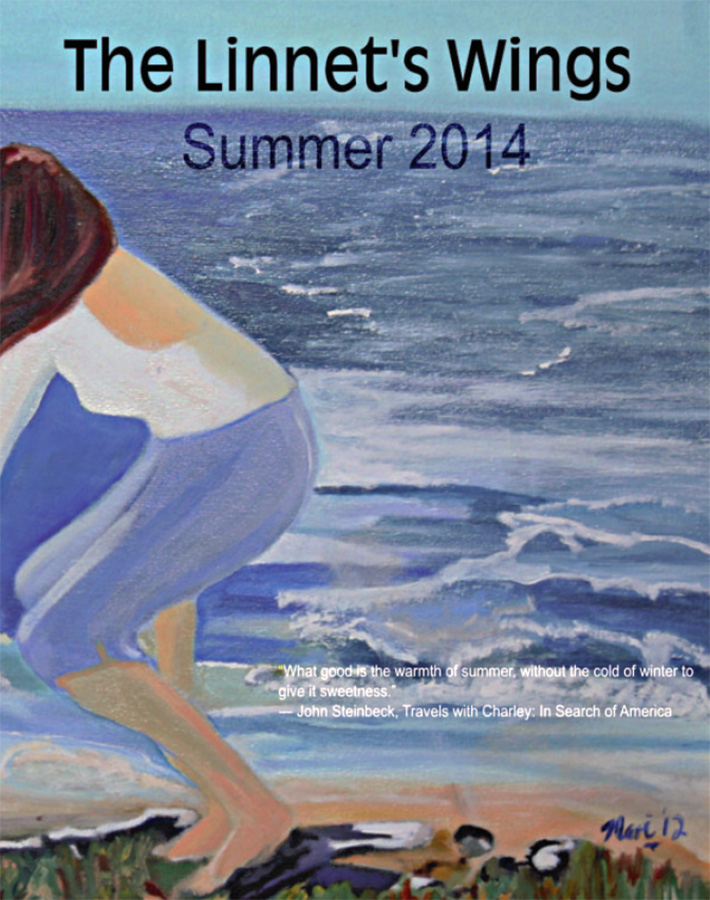
Summer Archive 2014
Persons attempting to find a motive in this narrative will be prosecuted; persons attempting to find a moral in it will be banished; persons attempting to find a plot in it will be shot.
BY ORDER OF THE AUTHOR
Per G.G., Chief of Ordnance.
(from The Adventures of Huckleberry Finn, Mark Twain)
Poetry: Wolf, Gaurveau, Needham, Noone
These poems move through stillness, mortality, escape and renewal, finding different ways to face what cannot easily be changed. Casey Wolf’s Point captures the stunned compression of time after a sudden blow, when past and future collapse into an inescapable present. R. Donald James Gauvreau’s Cigarette Gallery enters a darker interior, where grief, memory and addiction gather around the hope of reunion with the dead. In Eira Needham’s Brief Escape, the imagination rises above seasonal gloom into colour, flight and open sky before returning reluctantly to the room below, while Katherine Noone’s Adorned looks beyond autumn’s stripping winds to the promise of spring and trees newly clothed. Together, the poems trace a movement through shock, sorrow and darkness toward the possibility—however fragile—of light returning.
|
Wolf's choice of language--simple yet potent--mirrors the poem's core idea of a standstill. The imagery of the past and future pressing "in against now" as a "single point" vividly encapsulates the feeling of being trapped in the present, unable to move forward or retreat |
Gauvreaus' imagery is rich and evocative, creating a palpable atmosphere of melancholy and resignation. The poem beautifully captures the essence of grief and the coping mechanisms people resort to |
Eira Needham's use of rich imagery and symbolism invites readers to embark on their own brief escape, experiencing the fleeting moments of beauty and the inevitable return to reality. |
Noone's poem resonates deeply with themes that are both timeless and timely transformation, the cyclical nature of life, and the beauty found in renewal. It's a reminder that after the desolation of autumn and the cold of winter, there is always the promise of spring, a time for new beginnings and beauty |
Fiction: Joseph, Shel Anderson, Moat
|
In this gripping narrative, Saul, a tortured artist, navigates the treacherous waters of creativity and personal demons. Amidst the shadows of his past and the complexities of his relationship with Emily, he searches for truth in his art, embodying the quintessential struggle of the creator. |
"Love Song of a Divorce Attorney" is a poignant exploration of the human condition, masterfully blending the personal with the professional, the emotional with the environmental, to reveal the complex tapestry of life that unfolds even in the most ordinary momen |
This narrative provides a fertile ground for exploring themes of perception, reality, and the thin line between sanity and madness. It also touches on the deep human need for connection and understanding, and the ways in which people cope with challenging circumstances. |
Poetry: Torres, La Forge and Jackson
These poems move through change, memory and the fragile ways people shape themselves against the forces around them. In Zev Torres’s Carved from the Wind, movement through the natural world becomes light, elusive and almost musical, while Evolution turns to the domestic sphere, observing a mother whose anger, control and sudden social transformation are watched closely by her children. Jane Rosenberg La Forge’s At Pottery Barn considers death, cremation and remembrance with wit and unease, questioning what remains of us materially and symbolically after death. Beverly Jackson’s Feeding Frenzy closes on a warmer note, celebrating friendship, age and independence through food, gardening and the easy intimacy of two women who have learned to nourish themselves and one another. Together, the poems consider transformation in its many forms—from wind and family memory to mortality, survival and the pleasures of ordinary companionship.
|
"Carved from the Wind" by Zev Torres unfolds with a delicate, ethereal quality, evoking images of movement, transformation, and nature's ephemeral beauty. Its verses flow like the very wind it describes, meandering through scenes of grace, loss, and ultimately, a return. |
"Evolution" portrays the ongoing struggle to balance personal needs with familial and societal expectations, a theme that resonates deeply in the intricate dance of family life. |
"At Pottery Barn" by Jane Rosenberg La Forge is a profound poem that weaves together themes of loss, memory, and the search for meaning in the rituals of death. La Forge explores the personal and cultural dimensions of mourning through the physical and metaphorical scattering of ashes, contrasting different family members# choices and reflecting on the implications of these acts |
Beverly Jackson crafts a narrative that is both grounding and uplifting, reminding readers of the value in the connections we forge and the simple acts of living that bind us. |
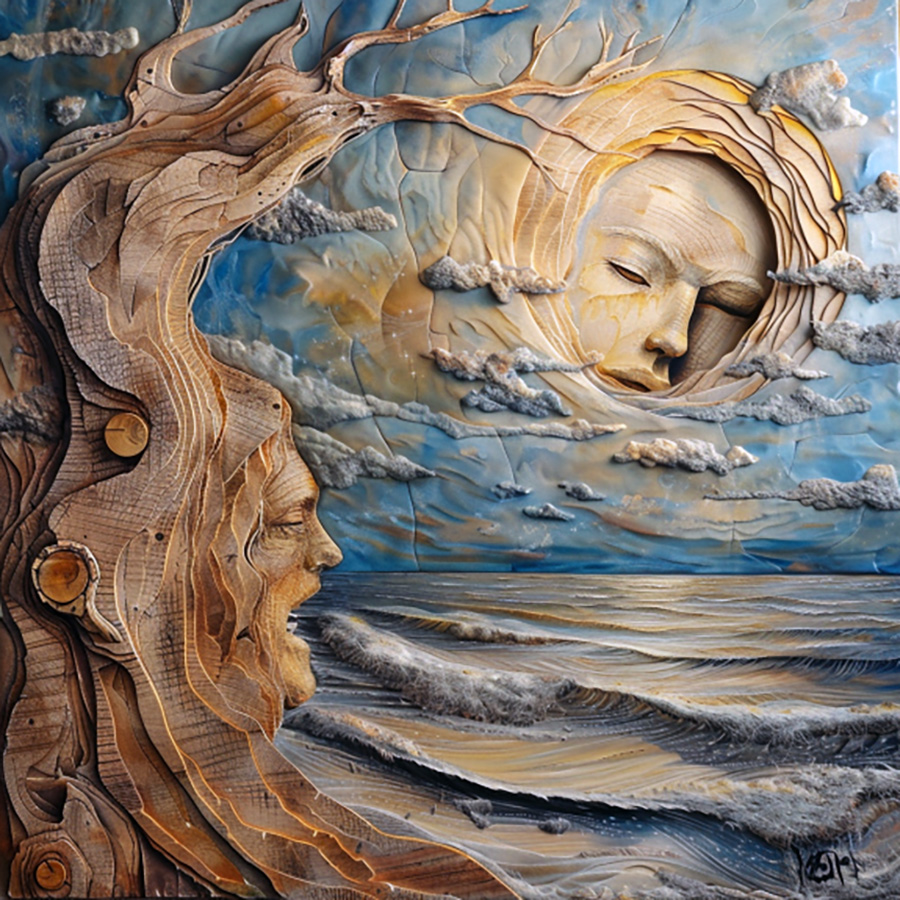
Carved From the Wind, The Linnet's Wings House Art
Poetry: Brennan and Holland
Four poems explore the uneasy distance between what we tell ourselves and what the body, memory and emotion insist upon. Caleb Brennan’s Daft uses the casual language of indifference to reveal the foolishness and vulnerability of falling in love. Tiff Holland’s three poems move through a remembered honeymoon shadowed by later illness, the changing meanings carried by beloved dogs, and a wildly inventive struggle against relentless internal noise. Humour, tenderness and physical experience run through the group, revealing how memory can make the ordinary suddenly intimate, strange and enduring.
|
This piece delicately balances modern slang with deep emotional truths, encapsulating a moment of personal revelation with simplicity and depth. Brennan's choice of language and imagery evokes a sense of youthful naivety and wisdom, a reminder of the complex emotions that come with human relationships. |
"Once I Wore a Red Bikini" beautifully marries the personal with the universal, reminding us that while our bodies and circumstances may change, the memories of who we once were and the moments we cherished remain intact, offering both solace and a bridge to our past selves. |
Holland's poem captures the dualities within the canine world and our relationship with it: the domesticated versus the wild, control versus freedom, and companionship versus utility. |
"Weathervane" by Tiff Holland is a powerful and vividly imaginative poem that delves into the themes of coping mechanisms, the quest for mental silence, and the struggle against overwhelming internal noise. The imagery Holland uses is striking, blending the mundane with the fantastical to illustrate the lengths one might go to in order to find peace and clarity amidst chaos. |
Fiction: West and Clausen
|
This story, while short, encapsulates a moment of dramatic tension between beauty and fear, innocence and the harshness of reality. It suggests the profound impact of external forces on personal dreams and the resilience of those dreams in the face of adversity. |
Clausen's narrative is a beautifully crafted meditation on life, loss, and the search for meaning amidst the ever-shifting landscapes of existence. It speaks to the heart of what it means to be human, to seek, to lose, and ultimately, to find oneself again in the face of life's relentless transformations. |
In Nagasaki Clausen invites readers to reflect on the significance of personal history and memory, and how they shape our perceptions of reality and identity. |
Poetry: Joslin, Blossom, LShok
Four very different pieces explore what the body remembers and what time cannot quite erase. Oonah V. Joslin’s five tankas move through mature love, humour, habit and the tenderness of ageing; Laurel Blossom’s Very Warm for March catches desire in the sudden warmth and recklessness of an early spring, while Red Rewind turns memory back through illness, sisterhood, art and bereavement, where love persists inside the machinery of grief. Linda LShok’s surreal Dark Snow closes the group in a more dreamlike register, transforming appetite, heat, domestic objects and the body into a strange, sensual landscape.
|
Oonah V. Joslin's tankas offer our readers a poetic glimpses into love, nature, and life's fleeting moments. Each verse weaves emotions and memories, revealing the beauty in the mundane and the eternal dance of change. Dive into a world where words paint lasting impressions on the heart and mind. |
"Very Warm for March" beautifully intertwines the awakening of the natural world with the awakening of human desires and connections. Blossom's use of imagery and intimate details creates a piece that resonates with the joy of early spring and the timeless nature of love. |
The poem invites readers to reflect on the nature of sibling relationships, the process of mourning, and the search for meaning in the face of mortality. Through its exploration of these themes, "Red Rewind" speaks to the universal experience of grappling with the complexities of love, loss, and the human condition. |
Dark Snow by Linda Shok is a narrative that seems to revel in contrasts: the tangible with the abstract, the domestic with the natural, and the intimate with the expansive. The prose is rich with metaphor and imagery, suggesting a deep undercurrent of emotion and longing beneath the surface of everyday actions. |
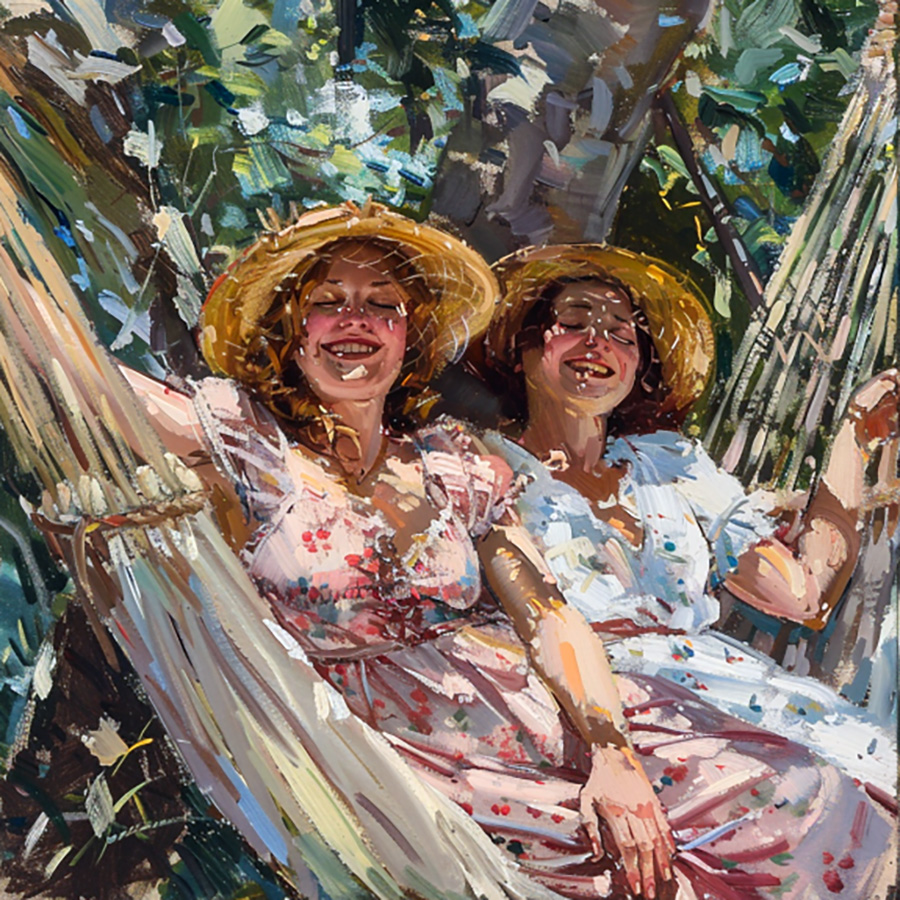
Dressed in flowered cotton and battered hats, we laugh ,,,The Linnet's Wings House Art
Fiction by DeLacy with 'Wings' Prologue and Editor's Note
These pieces explore the ways we inherit, question and reshape the beliefs that help us make sense of our lives. In Josh deLacy’s We Had Lived, grief is approached through family intimacy, humour, music and literature, as the rituals surrounding death reveal how people steady one another in the face of loss. Mum Maxim sets the familiar sayings and practical wisdom handed down through families beside the philosophical reflections of John Dewey, asking how advice, experience and independent thought shape our judgement. The Editor’s Note carries those questions into public life, reflecting on morality, institutional failure, social change and the responsibility of individuals to think, choose and act for themselves. Together, the pieces move between the personal and the collective, considering how love, memory, conscience and reflection become part of the inheritance we carry forward.
|
DeLacy's story resonates because it captures the essence of life's fragility and the significance of how we choose to remember and honor those we've lost. It's a testament to the healing power of storytelling, the comfort found in shared memories, and the enduring strength of familial bonds through the lens of love, loss, and the quirky, unforgettable moments that define our relationships. |
This compilation presents a striking contrast between traditional sayings, reflecting a blend of wisdom, cautionary advice, and folk wisdom, and the philosophical insights of John Dewey, a prominent figure in the philosophy of education and pragmatism. The traditional sayings encapsulate lessons learned through generations, often serving as guidelines for personal conduct, moral behavior, and the understanding of lifeFs unpredictabilities and challenges. |
Editor's Note: The updates from The Linnet's Wings touch on the bittersweet nature of transitions within any endeavor that involves passion and collective effort. The departures of Nonnie Augustine and Diana Ferraro mark the end of chapters but also underscore the impact of their contributions. |
Fiction: Robinson, Fitzpatrick, Landrum, Colbert
|
"Whitey Van Ness" by Bill Frank Robinson is a compelling and heartfelt narrative that captures the essence of human connection and the unexpected paths life can take. Through its memorable characters, evocative settings, and thought-provoking themes, the story offers a rich and satisfying reading experience that resonates long after the last page is turned. |
A captivating tale set in an Irish pub, where community, creativity, and a unique lying competition unite locals. Amid economic hardship, this heartwarming story weaves humor, tradition, and an unexpected twist involving the FBI, celebrating the enduring power of storytelling and community spirit." |
At its core, the story explores themes of redemption, resilience, and the transformative power of art -- whether it be through acting, music, or other creative outlets. Sossity's journey from a place of personal turmoil to one of advocacy and support for Leah signifies a broader commentary on the importance of compassion, community, and the role of art in reflecting and addressing societal issues. |
Colbert masterfully navigates the protagonist's journey through the New York arts scene, from his tentative steps back into acting to his encounters with a diverse array of characters, each contributing to his understanding of himself and his craft. The narrative is rich with references to literary and theatrical legends, grounding the story in a specific cultural milieu while exploring universal themes of creativity, identity, and belonging. |
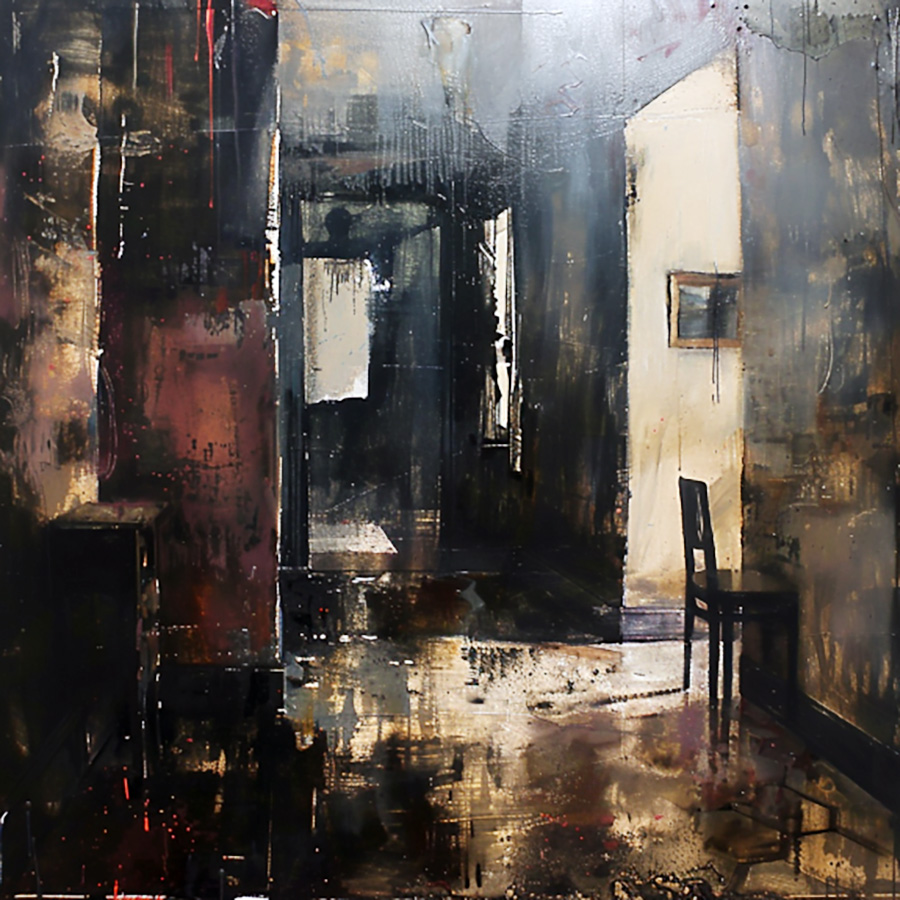
The tangible with the abstract, the domestic with the natural, and the intimate with the expansive, The Linnet's Wings House Art
Editorss for the Issue
Websites researched:
gutenberg.org/ wikipaintings.org/ goodreads.com, /
en.wikiquote.org/wiki/John_Dewey
Managing Editor
Marie Fitzpatrick
Senior Editor
Bill West
Editors for Review
English
Bill West
Yvette Flis
Marie Fitzpatrick
Guesting (Poetry)
Elizabeth Glixman
Spanish
Marie Fitzpatrick
Contributing Editor
Martin Heavisides
Consulting on Photography
Maia Cavelli
Consulting on Copy
Digby Beaumont
Web and Database Management
Peter Gilkes